
What Is Feijoada?
Feijoada is a Brazilian stew of beans cooked with a mixture of meats. The best-known version uses black beans, pork and sausages, sometimes with dried beef. Rice and several accompaniments turn it into a full meal: expect more than a bowl of beans with a little meat added.
If you are exploring Brazilian menus, this is the slow-cooked counterpart to the grilled meats of a churrascaria. Here is what goes into the pot, what arrives alongside it and what to ask before ordering.
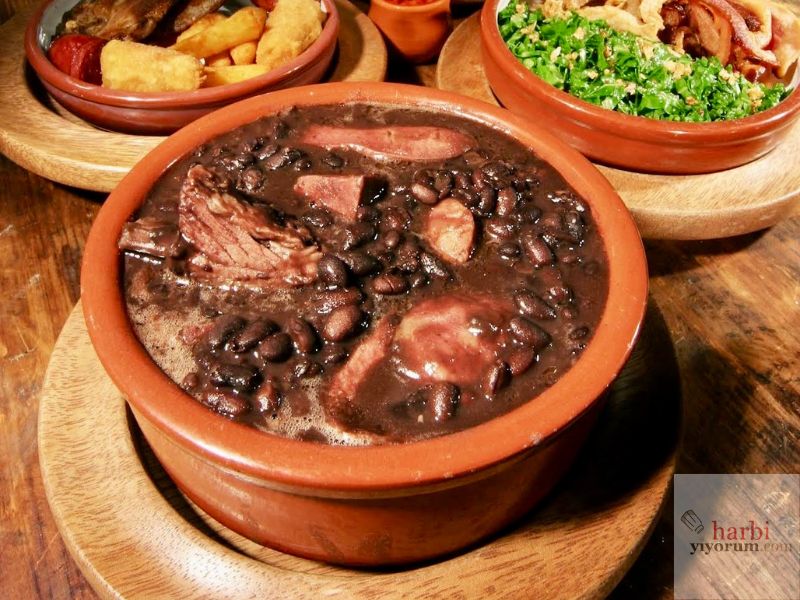
What goes into feijoada?
Black beans give the familiar Brazilian version its dark colour. The meat mixture varies: pork ribs, pork loin, sausages such as paio and salt-cured dried meat called carne-seca can all appear. Onion, garlic and bay leaves help build the flavour.
For a concrete example, Panelinha’s feijoada recipe combines black beans with salted pork ribs, salted pork loin, carne-seca and paio. That is one combination, rather than a fixed formula every restaurant follows.
Does feijoada contain pork?
Traditional Brazilian feijoada usually contains pork. A version that includes beef may still contain pork and pork sausage. If you avoid pork, ask which meats and cooking fats are used, including in the beans and side dishes.
Removing visible pieces of meat does not change what the beans have cooked with. A vegetarian or pork-free version needs to be identified as such; the name “feijoada” alone does not tell you enough.
What comes with feijoada?
The accompaniments are part of the attraction. White rice gives you a base for the beans and broth; sautéed couve, a leafy cabbage or collard-type green, brings another texture. Orange segments and cassava flour are also familiar additions.
Farofa is a crumbly accompaniment based on toasted cassava flour. Depending on the kitchen, it may have additional ingredients. Some meals also include torresmo, crisp fried pork skin. Ask what is included when comparing portions or menus.
Try the components separately before mixing everything together. A spoonful of beans with rice, a little farofa and a bite of orange give quite different combinations. There is no need to turn the whole plate into one mixture immediately.
What does feijoada taste like?
Think of a substantial, savoury stew in which beans and meats share the same cooking liquid. The beans soften and the broth thickens; cured or smoked meats can add saltiness and smoky notes. The balance depends on the cuts and sausages in that particular pot.
It is a meal to leave room for. If you are planning a day around several food stops, a full feijoada lunch and an unlimited rodízio dinner can compete for the same appetite.
Ordering feijoada in Brazil
Wednesday and Saturday are traditional feijoada days on many Brazilian restaurant menus, as noted in the University of São Paulo’s Portal Contemporâneo entry. Treat that as a useful clue when planning lunch and check the restaurant’s own schedule.
Before ordering, ask three things: is it available today, how many people does the portion serve, and which sides are included? A shared pot, an individual plate and a buffet offer different meals even when all are described as feijoada.
For the rest of your trip, our Rio de Janeiro food guide and São Paulo food guide cover the places and dishes from our own visits.
Is the familiar origin story true?
A widely repeated story says enslaved people created feijoada by cooking beans with pork scraps discarded by their enslavers. Historians have challenged this explanation. The University of São Paulo entry also discusses the dispute; the popular story should not be presented as an established account of the dish’s invention.
Feijoada has a place in Brazilian food culture without needing a neat, single-origin legend. For a visitor, understanding the pot and the way it is served is a better starting point than repeating an uncertain story.
Questions about feijoada
Is feijoada vegetarian?
The traditional meat version is not. Vegetarian adaptations exist, but check the beans, stock, cooking fat and accompaniments rather than assuming that a plate without visible meat is vegetarian.
Is feijoada always made with black beans?
Black beans define the best-known Brazilian version discussed here. The word is also used for other bean stews, so the name does not guarantee an identical recipe wherever you encounter it.
Why is orange served with feijoada?
Orange segments are a familiar accompaniment and add a fresh, juicy contrast to the beans and meats. They are served alongside the meal; they do not mean that the stew itself is orange-flavoured.
Is feijoada the same as rodízio?
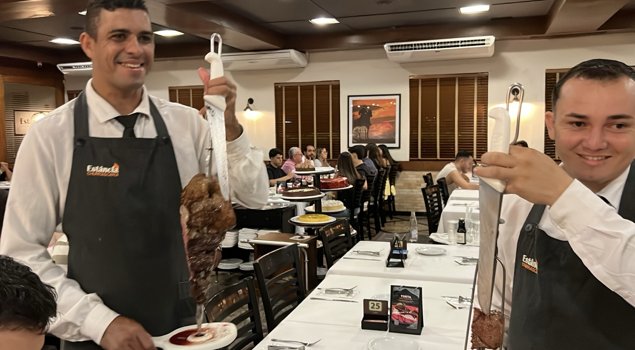
No. Feijoada is a dish; rodízio describes a style of service. At a churrascaria, servers may bring grilled meats to your table on skewers. Our Estância Catumbi dinner in São Paulo shows that experience.
Keep exploring Brazilian food
For us, feijoada is a useful reminder to look beyond Brazil’s grills when reading a menu. Beans, slow-cooked meats and a table of accompaniments reveal a different kind of meal.
Editor’s note and sources
Last checked: 23 October 2026. This English adaptation explains the dish for travellers. Ingredients and service vary by kitchen. The reference points are Panelinha’s recipe and the University of São Paulo’s entry on feijoada.
Support the campaign we run with UNICEF Türkiye. Helping children heal helps the world heal.