What Is Hungarian Winter Salami? Téliszalámi Explained
Hungarian winter salami, or téliszalámi, is a smoked, dry-cured salami traditionally made with pork and pork fat. Its characteristic pale mold covering develops during maturation. The name recalls seasonal production rather than a rule about when to eat it.
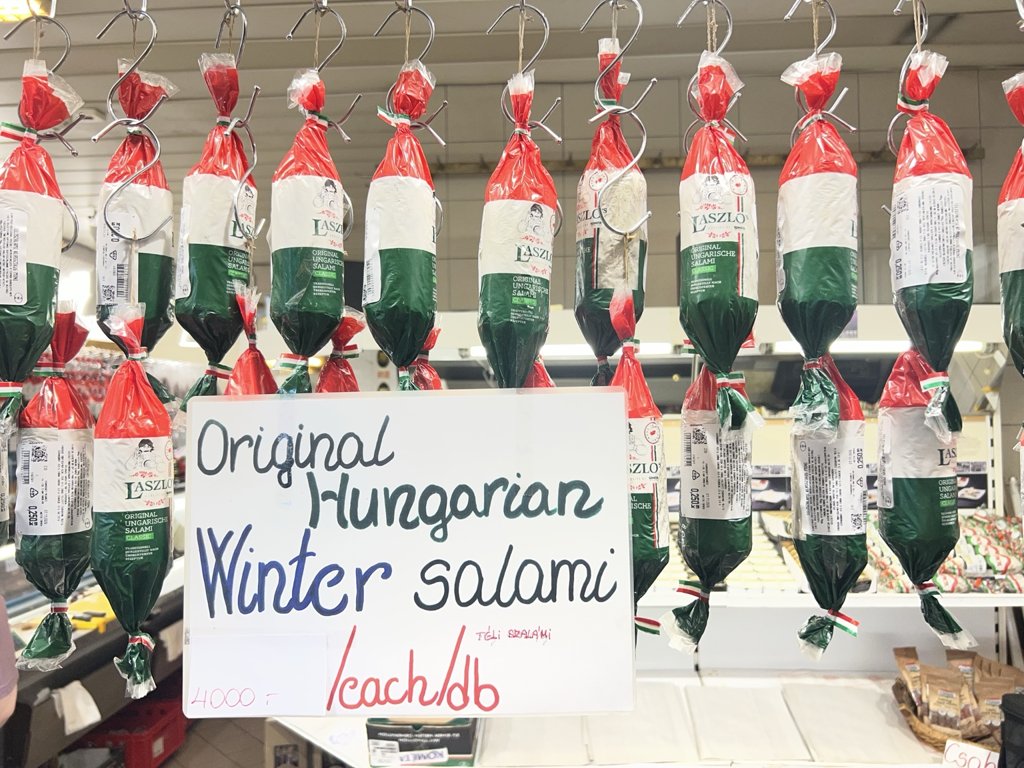
In Budapest, hanging salamis wrapped in red, white and green caught our attention beneath a sign reading “Original Hungarian Winter salami.” We bought winter salami during the trip and spent time browsing the charcuterie counters at Central Market Hall. Understanding the names on those wrappers is useful: “Hungarian salami,” a regional name and a brand name do not all tell you the same thing.
What is téliszalámi?
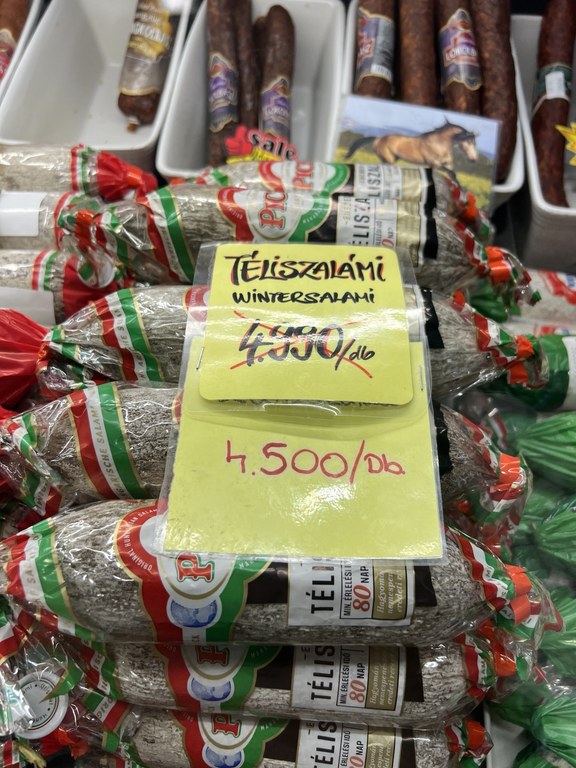
Téli means winter-related; szalámi means salami. On an English label, look for “winter salami,” sometimes written as “wintersalami.”
The traditional process combines seasoned meat and fat, filling into a casing, smoking and a period of drying and maturation. The official description of Szegedi téliszalámi specifies pork, pork fat and a special mold covering. That describes the Szeged product, rather than a universal recipe for every salami on a Hungarian market stall.
Why is it called winter salami?
The name comes from a time when the season helped determine production conditions. The historical specification for Budapesti téliszalámi explains that it was made only in winter in the 19th century, before producers could artificially cool drying rooms and regulate their humidity.
Today, the name carries that history. You do not need to wait for winter to buy it or put it on the table.
How is Hungarian winter salami made?
Meat and fat are prepared, mixed with salt and seasoning, and filled into a casing. Smoking and slow maturation follow. The precise seasoning and production time depend on the product and producer.
For a concrete example, PICK describes its own winter salami as undergoing a traditional smoking and curing process lasting nearly 100 days. That is a detail about PICK’s product, not a timetable to apply to every téliszalámi.
What is the white coating?
The pale outer layer is a characteristic mold covering associated with maturation. In traditional winter salami production, it is part of the product’s development, not simply decoration.
For the salami you buy, follow its packaging instructions for removing the casing and storing it before and after opening. The intended maturation coating does not mean that every later change on a stored product is the same thing.
Winter salami, PICK and Hungarian salami: what is the difference?
- Hungarian salami is a broad description, not one single recipe.
- Winter salami or téliszalámi identifies the type.
- PICK is a producer’s brand.
- Szegedi or Budapesti adds a regional identity to the product name.
Our first photograph shows László’s wrappers marked “Original Ungarische Salami Classic,” below the seller’s winter salami sign. It should not be mistaken for a photograph of PICK. Read the actual wrapper rather than letting the colors or a large “original” sign make the decision for you.
Buying winter salami in Budapest
At Central Market Hall, we browsed salami and sausage stalls alongside the spice displays. It was a useful place to compare wrappers, product names and sizes.
Before choosing, check the producer, full product name, ingredients, net weight and storage instructions. Compare the price per kilogram as well as the price of the whole piece: similar-looking packages can contain different amounts.
If paprika is also on your shopping list, our Hungarian paprika guide explains the powders and pepper pastes you will find nearby.
How to serve winter salami
Thin slices, bread, pickles and cheese make a simple way to serve it. Try a slice on its own first, then build a small plate around it: bread for the base, something pickled alongside, and cheese if you want a fuller spread.
Frequently asked questions
Does winter salami contain pork?
Traditional examples, including the Szeged product described above, use pork and pork fat. Read the ingredients on the specific package when choosing.
Is téliszalámi the same as winter salami?
Yes. Téliszalámi is the Hungarian name, and winter salami is the English equivalent.
Is every Hungarian salami a winter salami?
No. Look for the full product name rather than treating “Hungarian” as the name of one particular style.
Is winter salami only available in winter?
No. The name reflects the history of its production, not a season in which it must be eaten.
More Hungarian food to explore
Continue with our Hungarian food guide for dishes, street food and sweets, or use our Central Market Hall guide to plan your market visit.