
What Is Picanha?
Picanha is a triangular cut of beef from the cap of the top sirloin, usually prepared with a layer of fat along one side. It is closely associated with Brazilian barbecue. On a menu, the name tells you which cut of meat you are ordering; the seasoning and cooking method can vary.
The fat cap is its most recognisable feature. Learning the cut’s other names also helps when you move from a Brazilian restaurant to a butcher’s counter.
What cut of beef is picanha?
Picanha is the cap muscle over the top sirloin, towards the rear of the animal. The whole piece has a roughly triangular shape. It is a specific part of that region, rather than the whole rump or every steak sold as sirloin.
The Beef Checkoff cut guide lists picanha alongside coulotte and top sirloin cap. In Australia, Meat & Livestock Australia identifies it as rump cap.
| Name | Where you may encounter it |
|---|---|
| Picanha | Brazilian menus and butcher shops |
| Top sirloin cap / coulotte | American cut guides |
| Rump cap | Australian cut guides |
When buying it, ask for the cap with its characteristic fat layer retained. Naming and trimming practices differ between shops, so a familiar label is only the start of the conversation.
Is picanha the same as filet mignon or tri-tip?
Picanha and filet mignon are different cuts. Filet mignon comes from the tenderloin, a separate, lean muscle. Picanha has its own texture and is commonly served with a visible strip of fat at the edge.
Tri-tip is different too. Both whole pieces can look triangular, but the American cut system places picanha at the top sirloin cap and tri-tip in the bottom sirloin. Shape alone is not enough to identify them.
Why is the fat cap left on?
The outer fat is part of the familiar picanha preparation. As it cooks, it renders and contributes flavour and richness to the browned edge. Trimming the whole cap away changes that style of serving the cut.
Keeping fat on during cooking and choosing how much to eat are separate decisions. At the table, you can leave some of the fatty edge if you prefer. A thick outer cap also does not tell you exactly how much marbling there is inside the meat.
What does picanha taste like?
Expect a pronounced beef flavour, with the browned fat adding richness. The result still depends on the quality of the meat, the cooking and the way it is sliced. The name on the menu does not guarantee that every serving will be equally tender.
Simple seasoning is common. Fogo de Chão’s own menu, for example, describes its picanha as lightly seasoned with rock salt and carved into thin slices.
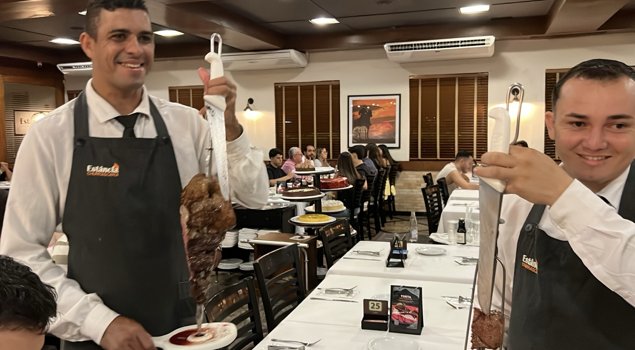
At Estância’s Catumbi branch in São Paulo, we particularly liked the garlic version. Some of the other meats were tougher than we expected, so our visit also showed why it is worth judging each cut on the plate.
Picanha, churrasco and rodízio: what is the difference?
| Term | Meaning |
|---|---|
| Picanha | A cut of beef |
| Churrasco | A tradition of grilling meat over a fire |
| Churrascaria | A restaurant associated with that barbecue tradition |
| Rodízio | A style of service; at a churrascaria, servers bring different meats around the tables |
You may eat picanha in a churrascaria during rodízio service. Cook the same cut in a pan at home and it is still picanha. These words describe different parts of the meal.
How can you cook picanha?
Picanha can be roasted whole, barbecued or portioned into steaks. A whole piece and individual steaks need different timing; thickness, starting temperature and equipment all matter.
On a barbecue
Whole pieces or steaks can be grilled. Watch for flare-ups as fat drips onto the heat, and use a cooler part of the grill when necessary. Check the centre with a meat thermometer rather than relying only on a browned exterior.
In a pan
Steaks can be cooked in a pan, including the fatty edge. Give that edge attention as well as the two broad faces. The exact cooking time depends on the thickness and heat, so a universal minutes-per-side rule is not particularly useful.
In the oven
A whole cap can be oven-roasted. After cooking, rest the meat and cut serving slices across the grain. Look at the direction of the fibres before slicing: the way you cut affects how easy each bite is to chew.
Temperature check: FoodSafety.gov recommends at least 145°F / 63°C for beef steaks and roasts, followed by a three-minute rest. Use a food thermometer to check the internal temperature.
Ordering picanha in Brazil
For an à la carte order, ask how the meat is prepared, how many people the portion serves and what comes with it. At a rodízio, ask the server which skewer is picanha and explain your preferred doneness.
There is no need to accept every cut as it comes around. At our Estância meal, the red side of the table card signalled a pause and the green side invited more service. Taking a break gives you time to enjoy what is already on your plate.
Questions about picanha
Is picanha beef or pork?
Picanha in the Brazilian beef-barbecue context is a beef cut. The name describes the cut, not a breed of cattle.
Does picanha have to be cooked on a skewer?
No. Skewers are familiar in Brazilian barbecue restaurants, but the cut can also be grilled, pan-cooked as steaks or roasted whole.
Should you remove all the fat?
The fat cap is usually retained for the familiar Brazilian preparation. Trimming preferences vary; you can also decide how much of the cooked fatty edge to eat.
Is garlic part of every picanha preparation?
No. Garlic is one seasoning option. We enjoyed garlic picanha at Estância, while a simple salt seasoning is another common approach.
Explore more Brazilian food
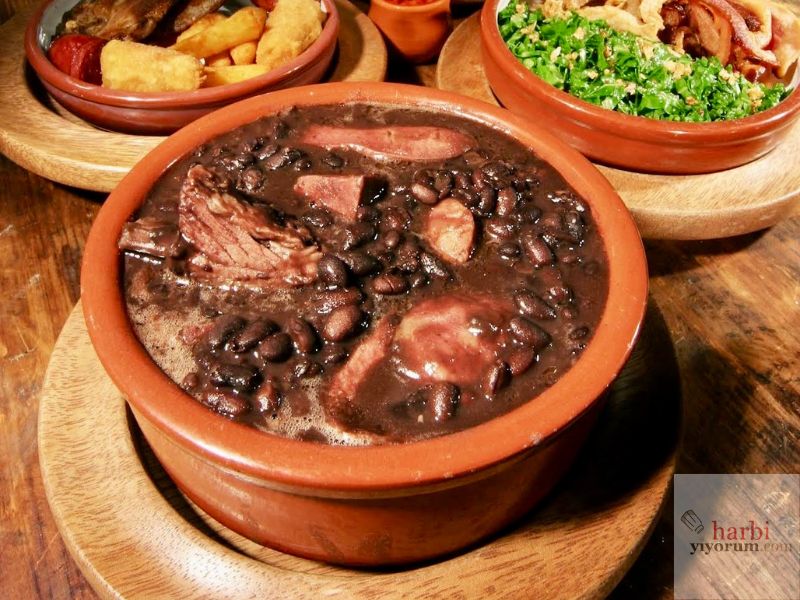
For a different side of Brazilian cooking, read what goes into feijoada, the bean and meat stew. Our city guides bring together the stops from our travels.
Editor’s note and sources
Last checked: 23 October 2026. Cut names and cooking guidance were checked against Beef Checkoff, Meat & Livestock Australia, Fogo de Chão and FoodSafety.gov. The restaurant photograph and Estância observations are from our own visit.
Support the campaign we run with UNICEF Türkiye. Helping children heal helps the world heal.


Pingback: What Is Coxinha? Brazil’s Chicken Snack Explained