Hungarian Paprika Guide: Sweet, Hot, Smoked and Pepper Pastes
Paprika is a spice made from dried, ground peppers, with sweet and hot varieties. In Hungarian, the word also means the pepper itself. In Budapest’s shops, that leads to a much wider choice than a packet of red powder: pepper creams in tubes, crushed-pepper condiments in jars and seasoning pastes for particular dishes.
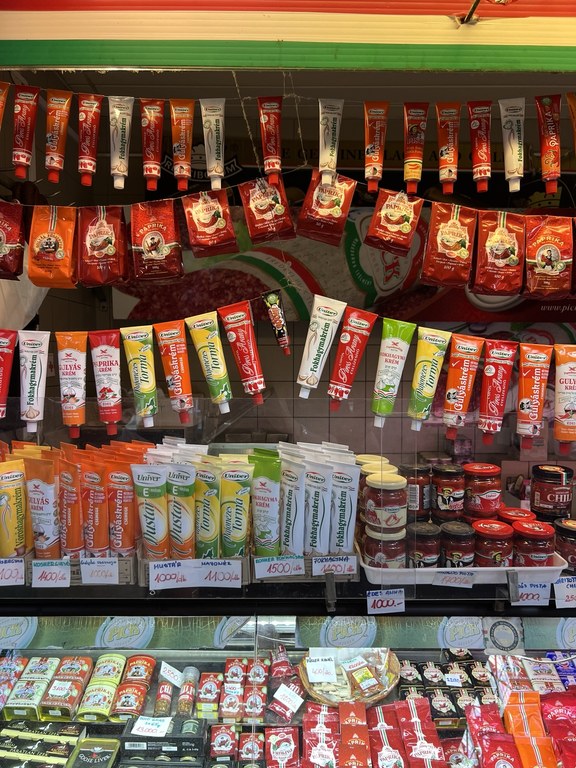
At Central Market Hall, that variety caught our attention. We saw sweet, hot and smoked products, gift packaging and even paprika magnets. After eating paprika-rich dishes at Frici Papa, browsing those shelves showed us another side of the same ingredient.
Sweet, hot and smoked paprika: three labels to understand
Paprika does not automatically mean hot pepper. Sweet varieties bring pepper flavor and color; hot varieties add heat. Smoking is a separate characteristic, so check both the heat and the smoke description.
| Type | What it adds | Words to look for |
|---|---|---|
| Sweet paprika | Pepper flavor and color, with little heat | Sweet; édes |
| Hot paprika | Pepper flavor plus heat | Hot; csípős; erős |
| Smoked paprika | A smoky flavor | Smoked; füstölt — then check whether it is sweet or hot |
“Sweet” does not mean a dessert spice or necessarily added sugar. “Hungarian” does not mean smoked. Origin, heat and processing describe different things, and reading them separately makes choosing a packet much easier.
What is paprika paste?
Paprika paste is a moist pepper product, usually spooned from a jar or squeezed from a tube. It differs from dry ground paprika in texture, concentration and often its additional ingredients.
The tubes were among the products we spent longest looking at in the market. Their packaging reminded us of squeezable chocolate tubes, but the contents were savory pepper seasonings for food.
Turkish biber salçası, or pepper paste, offers a familiar comparison for us. It does not make every Hungarian pepper cream identical to salça: pepper content, salt, other vegetables and seasonings vary. Powder and paste are not automatically interchangeable spoon for spoon.
Piros Arany, Erős Pista, Édes Anna and gulyáskrém
These names help you distinguish products on the shelf. Piros Arany, Erős Pista and Édes Anna are specific product names, rather than generic names for every Hungarian pepper paste.
| Name | What to expect |
|---|---|
| Piros Arany / Red Gold | Pepper cream available in mild and spicy versions |
| Erős Pista | A hot crushed-pepper condiment |
| Édes Anna | A mild crushed-pepper alternative |
| Gulyáskrém / goulash paste | A prepared seasoning paste for goulash; check its full ingredients |
Univer’s Hungarian-flavors range lists pepper creams and goulash pastes separately. Its ingredient lists for Erős Pista and Édes Anna include salt alongside crushed peppers. Read the package before seasoning an already salted dish.
How to use powder and paste
Ground paprika is useful in soups, stews and sauces. When it meets the cooking fat, it contributes flavor throughout the dish. Avoid burning it over high heat, which can make it bitter.
With a jar or tube, start by checking whether you have a pepper condiment or a seasoning blend. Add a small amount first, taste, then decide whether the dish needs more heat or salt. Follow the package’s storage instructions after opening.
If a recipe calls for sweet paprika powder, a hot, salty paste will change several things at once. Choose the form that matches what you intend to cook.
Why paprika matters in Hungarian cooking
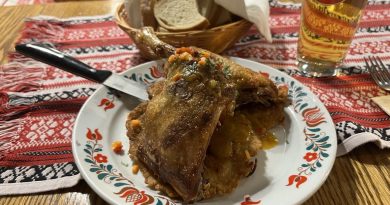
We encountered it in three different forms at one dinner: goulash soup, red-wine beef pörkölt and chicken in a creamy paprika sauce. The shared ingredient did not make them taste or eat like the same dish.
- Gulyás soup puts paprika into a broth with meat and vegetables.
- Pörkölt concentrates onion and paprika into a thicker sauce around the meat.
- Chicken paprikash pairs the pepper character with a creamy finish.
Our Frici Papa review covers that meal. Looking at paprika on the market shelves afterward connected the restaurant plates with the ingredients people take home.
Beyond the spice shelf
We also noticed paprika among the charcuterie counters and on pork cracklings. The plain cracklings sat alongside orange-red paprika-coated pieces, while sausages offered another set of pepper and heat variations.
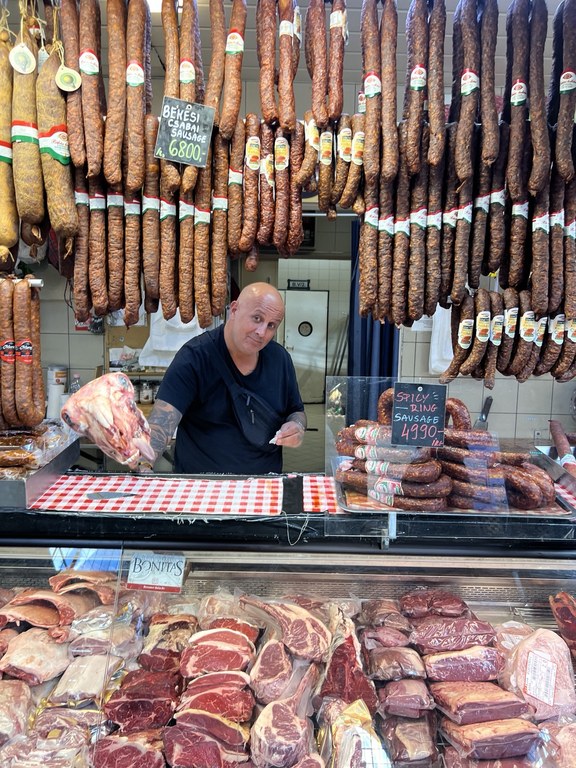
We tried 100 grams of pork cracklings and found even that amount very rich. What we wanted was a little acidity, such as lemon or lime. Paprika could add another flavor, but its seasoning and citrus sharpness would do different jobs.
A smoky sausage does not necessarily contain smoked paprika: the sausage itself may have been smoked. The color alone cannot settle that question; look at the label or ask the seller.
Buying paprika in Budapest
We would start by deciding what we wanted to use it for. Powder makes sense for cooking dishes that call for ground paprika. A jar or tube offers a ready-made condiment or seasoning. Gift packaging is another choice, but the product inside still deserves a look.
- Form: powder, flakes, pepper paste or a seasoning blend.
- Heat and smoke: check them independently.
- Ingredients: look at pepper content, salt and additions in prepared products.
- Origin: a Budapest purchase does not by itself establish where the peppers were grown.
- Quantity and storage: compare net weight, dates and instructions after opening.
We saw Great Taste labels on some packets. Those caught our eye, but the heat, ingredients and intended use still came first in deciding what suited our kitchen.
For the stalls and other foods we browsed, read our Central Market Hall Budapest guide.
Frequently asked questions
Is Hungarian paprika always hot?
No. Sweet and hot varieties are available. Check the heat description on the packet.
Is Hungarian paprika the same as smoked paprika?
No. Hungarian describes origin or style; smoked describes processing and flavor. A Hungarian paprika need not be smoked.
Can I replace paprika powder with paste?
Not as an automatic equal-quantity substitution. Paste can add moisture, salt, heat and other seasonings. Check its ingredients and adjust the dish accordingly.
Which should I bring home: powder or paste?
Choose powder for recipes calling for the ground spice. Compare pastes if you want a prepared pepper condiment, paying attention to salt and heat.
Explore more Hungarian food
Our What to Eat in Hungary guide connects dishes with market products. Paprika belongs in both: in the sauce on the plate, and in the packet or jar you choose for your own kitchen.